


I have to hold my hands up, we've let you down a bit in recent times. The site hasn't been updated and to be truthful, it has looked a bit in need of some TLC. This should change! Our webmaster, Jim Chestnut, met with Stewart Noble and me today, to give us a crash course in updating and maintaining the site.
Some of the changes you should notice immediately. Others including improving the search terms for Google (other search engines are available!), will be ongoing but will take a bit longer.
Robert Ryan (Chairman Helensburgh Heritage Trust)

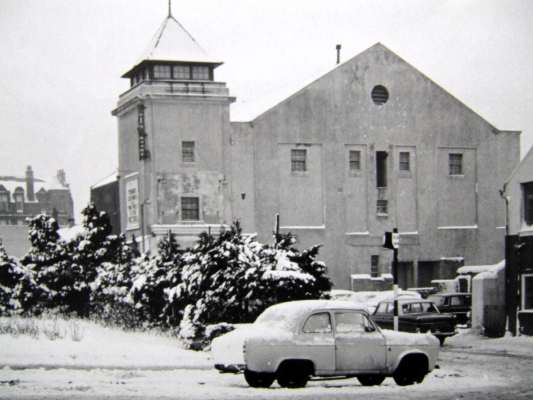
Wednesday 28th October 2026 at 7.00pm
Helensburgh and Lomond Civic Centre
38 East Clyde Street
Helensburgh G84 7PG

At Helensburgh the twenty-seventh day of July eighteen hundred and thirty-three, at eight o'clock AM being the time fixed for ascertaining and going along the Boundary lines of the Burgh specified in the charter and fixing in proper places Boundary stones in order that the Boundaries may be known in time coming.
BONAR LAW HOUSE
When the former Clyde Street School was converted and extended to become the Helensburgh and Lomond Civic Centre in 2015, the former janitor's house became Bonar Law House. It is now used by the social work department of Argyll and Bute Council as temporary accommodation for people in urgent need of re-housing.
This brief article was written to explain to anyone living there how Bonar Law House got its name, and it is on display in the building.
*******************************************************************************************************
BONAR LAW HOUSE
How did this building get its name? Andrew Bonar Law was a Helensburgh resident who became British Prime Minister.
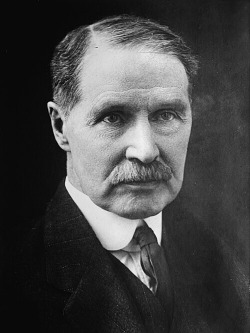
Bonar Law by Walter Stoneman 1923
Did Bonar Law live in this building? No. This used to be the janitor's house for Clyde Street School. However for a while Bonar Law lived in a house called Seabank which until the 1950s stood where the main car park for the Civic Centre now is.
Where was he born? He was born on 16 September 1858 in New Brunswick in Canada. He was the first British Prime Minister to be born overseas.
How did he come to live in Helensburgh? His mother, who was a member of the Kidston family from Helensburgh, died when Bonar was only 2 years old. Ten years later his father remarried and it was decided at that time that he should come and live with his Kidston relatives in Helensburgh.
When he came here he at first lived with his aunt Janet Kidston in the house called Seabank. Later the house became his, and later he had another home in Helensburgh.
How did he get into politics? His Kidston relatives helped to set him up in the iron trade in Glasgow, and he was very successful. He later became interested in debating and politics, and was elected an MP for the first time in 1900, representing the Conservative party.
How did he become Prime Minister? During the First World War King George V asked Bonar Law to become Prime Minister, but he declined, believing that Lloyd George would be a better wartime leader. He subsequently served in Lloyd George's Wartime Coalition Cabinet. He finally became Prime Minister in October 1922.
For how long was he Prime Minister? Only for 209 days. He had to resign in May 1923 because he had been diagnosed with incurable throat cancer. He died roughly 6 months later on 30 October 1923.
He had the shortest spell as Prime Minister of any politician in the 20th century. Other Prime Ministers both in the 19th and 21st centuries have spent less time in office.
What did he do in Helensburgh? He worshipped in what is now Helensburgh Parish Church, where he and other family members are commemorated in a stained-glass window. He was also a prominent member of the local golf and tennis clubs. There is a family grave in Helensburgh Cemetery. Although he is commemorated on the gravestone, his ashes were buried in Westminster Abbey in London.
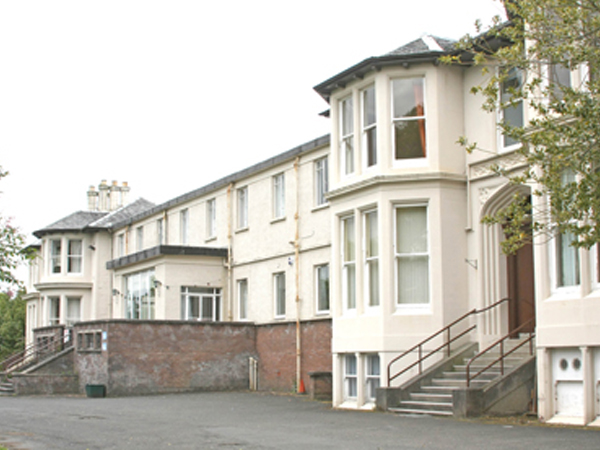
AFTER 55 years of service to the people of Helensburgh and district, the Church of Scotland’s Clyde View Eventide Home closed its doors.
Many elderly members of the community were residents at Clyde View, including several centenarians, and the final residents were transferred to other local homes.

THE sad event of 8 September 2022 has set me thinking back to the Queen’s Accession on 6 February 1952.
AN internationally respected scientist who was one of the last surviving people who served at wartime RAF Helensburgh, Professor John Allen, died on October 25 2019 at the age of 98.
News of his death at Halesworth, Suffolk, came from Mrs Frances McLaren, nee Shedden, who served alongside John at the Marine Aircraft Experimental Establishment at Rhu and Helensburgh during World War Two.
THE B-20 was a revolutionary World War Two flying boat about to be put through its paces by RAF Helensburgh before it was granted the airworthy certificate to allow full production.
But tragically the Dumbarton-developed aircraft never arrived at the Gareloch base.
A LEADING Helensburgh businessman of the 1980s and 90s was lucky to survive on board a ship which was torpedoed during World War Two.
Footballer and athlete Jack Quinlan went on to run several local businesses in the district and was very well known for his charitable work.
 Richard De’Ath
(1927 – 2011)
Richard De’Ath was a successful and highly respected Glasgow architect who lived for most of his working life in Helensburgh. He was born in Huddersfield, West Yorkshire, but grew up in Paisley, where his father was a chief chemist at J&P Coats.
 William Daniell, RA
(1769 – 1837)
Portrait of William Daniell
by Richard Westall, drawing master
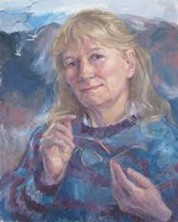
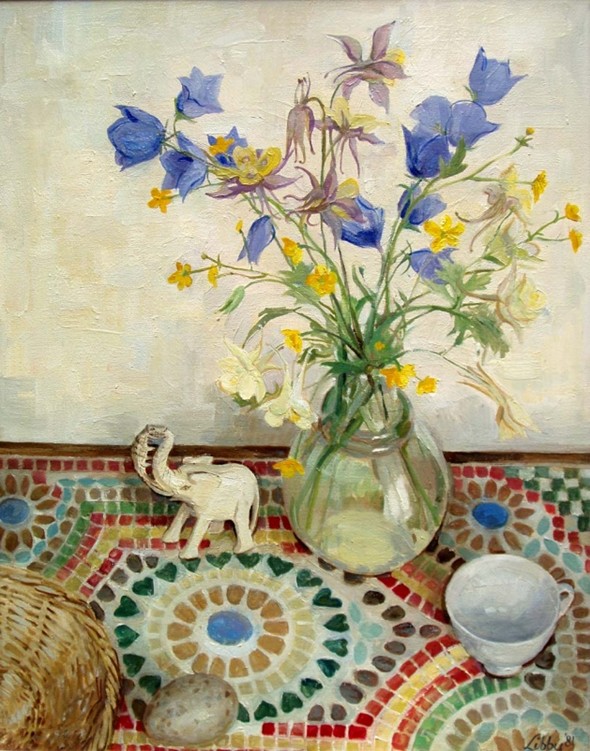
Libby Anderson DA (Living artist)
After completing her training in Glasgow School of Art in 1969 Libby travelled extensively and since 1996 has been working as a full time artist in Argyll. She is known for her oil paintings of fungi and other subjects from the natural world.
As a portrait painter, she has painted many commissions in Argyll and other parts of the U.K., France, Southern Africa and America.
Libby’s mixed media works on paper are generally themes of movement and shifting colour. Mythical seals, dancers and birds are frequent vehicles for her ideas.
Libby’s works can be found in collections all over the world.
Works in Anderson Trust Collection
81 “Still Life” (oil 58x44 cm)
(Donated by family of Mrs Joan Mackey 2008)
Welcome to Helensburgh Heritage
WELCOME to the Helensburgh Heritage Trust website.
We hope you find it simple to navigate, with 1,702 articles, a Photo Gallery with 2,179 images in 23 albums, letters, 18 document downloads, and links to 113 local websites.
Contributions are welcome, and should be emailed using Contact Us.

Photo Gallery

Application to Join
Click the image above
Charity Number
Scottish Charitable Incorporated Organisation
SC024603